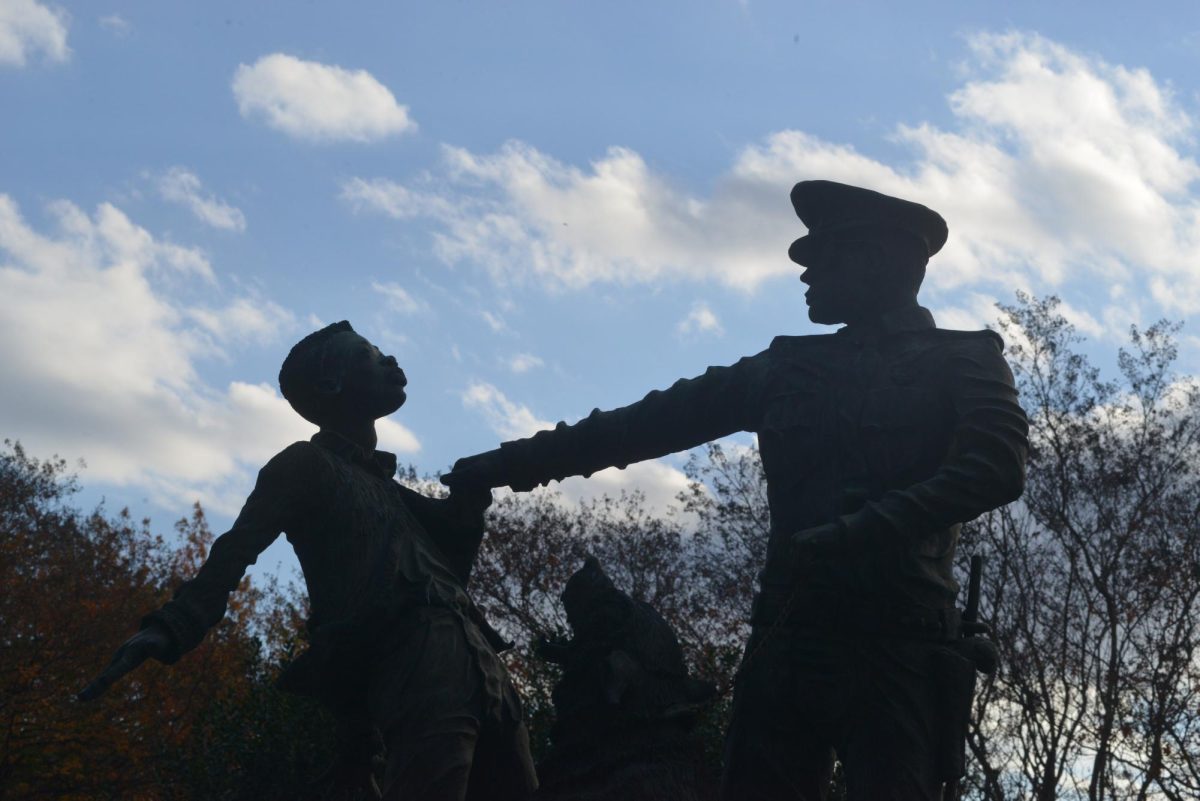
Every ISA class takes a trip. The Freshmen go to Houston, the Sophomores go to New Mexico, the Seniors go to Washington DC, and the Juniors go to Alabama. Every trip has a learning purpose, and each of them are intended to help students better understand a piece of the world. The junior trip is the heaviest and some would say the most impactful of the four.
From Nov. 16-21, the ISA juniors are immersed in the intense history of the American Civil Rights Movement. They visit historical places such as the 16th Street Baptist Church as well as other powerful places like the Legacy Museum and the Memorial for Peace and Justice. They visited several cities within Alabama, including Birmingham, Montgomery, and Selma.
Many juniors would agree that one of the most impactful events was the Children’s March Speaker at the 16th Street Baptist Church. Pastor Gwendolyn Cook-Webb was a child during the Children’s March and students had the opportunity to hear her story and learn about another perspective from the Civil Rights Movement. She talked about the perseverance and determination that the students in the Children’s March had, and she addressed how many of these attributes should be a part of how students live their lives even now.
“Regardless of how things in society may change, don’t change with the bad things that go on in society. Love your fellow man, which means male, female, boy, girl, love your neighbor as you would love yourself.” Pastor Cook-Webb said.
It was words such as those that put tears in the eyes of many who were there, students, teachers, and chaperones alike. Pastor Cook-Webb connected to the hearts of all who were in attendance by taking this historical event that seems so long ago, and putting into a perspective that made it more relevant and understandable even now.
Another impactful part of the Alabama trip was the Equal Justice Initiative (EJI) sites. The Legacy Museum, the National Memorial for Peace and Justice, and the Freedom Monument Sculpture Park were all a part of the EJI initiative. These sites were intended to immerse the audience in the truth, and put the facts and the stories in a way that couldn’t be ignored, denied, or overlooked.
Each museum had a specific focus, and each was a part of the bigger picture. The Legacy Museum was intended to provide the context and the horrifying historical facts. It showed the history all the way from before America was an independent Nation, all the way to present events. It had a wide array of exhibits from interactive projections that told their stories, to jars of dirt from lynching sites, to a hallway filled with all of the statistics and the stories that went with them. The Legacy Museum was built in the place where a cotton warehouse used to stand, a warehouse that was often used to hold enslaved African Americans before they were sold at the nearby slave market. It was a powerful museum that truly exposed the truthful horrors of your past.
Then, the National Memorial for Peace and Justice was specifically about the widespread lynchings that were being inflicted on the African American populace. This memorial was entirely outside, and the first part featured life-sized metal cuboids that went from standing, to hanging, to laying flat on the ground. Inscribed on the metal were the names of the lynching victims, the dates they were killed, and the county where they occured. Every county was accounted for, and seeing the widespread violence was a shock. The second part of the Memorial had plaques that told individual stories of lynchings, and for the vast majority of them, the perpetrators were never held accountable. This Memorial shared the gruesome violence of our past, and it gave specific details in regards to how justice was never served.
The Freedom Monument Sculpture Park focused more on the cultural side of history, and was a place where artists could express their thoughts and feelings about African American and Indigenous lives in America. It expressed the underlying thoughts and feelings of the people better than words ever could.
Each of these museums, while different in their own way, added context and detail to the tapestry of color that is America. Overall, by taking this trip, ISA Juniors were allowed the opportunity to better understand our history and our culture. By analyzing and learning about parts of our history that are often overlooked or covered up, students can help ensure that the choices of our future are better than the mistakes of our past.
And special thanks to Lydia Pinthong for providing the interview with Pastor Cook-Webb and the cover photo